How to make a small room photograph bigger
Short answer
Shoot from a corner to use the room's longest diagonal, or through the open doorway from outside. Keep the camera level at chest height so verticals stay straight. Light every corner, clear the floor, and leave as much continuous floor visible as possible — visible floor is the strongest size cue a photo has.
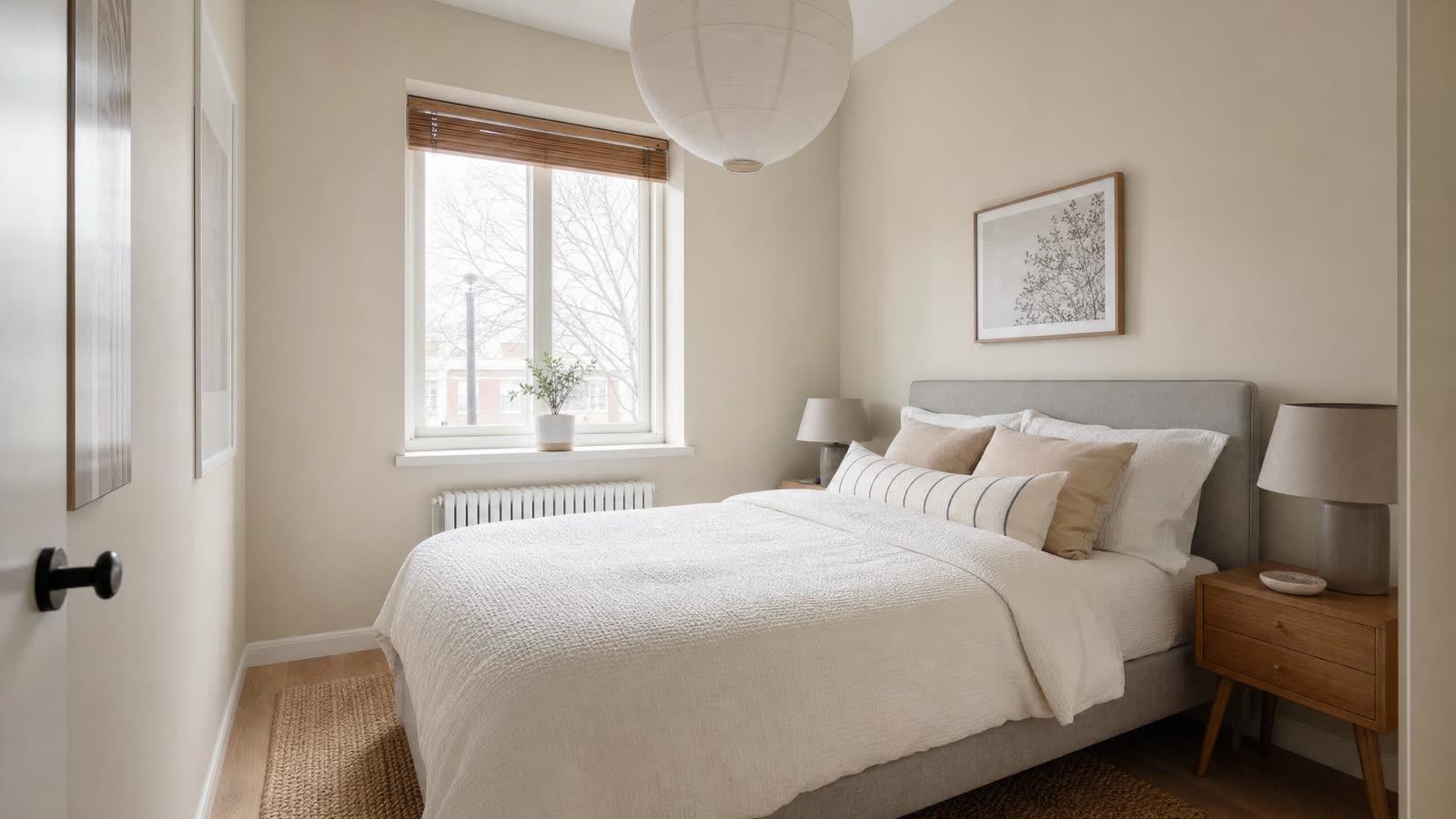
Cameras compress space. A bedroom that feels perfectly comfortable to stand in can look like a closet in a photo, and buyers filter on that impression before they ever read the square footage. These are the techniques that give a small room its real size back — none of them misrepresent anything.
Shoot from a corner, not a wall
Standing flat against the middle of a wall gives you the shortest possible sightline. Backing into a corner gives you the room’s longest diagonal, which is often 40 percent more distance, and it puts two walls in frame so the eye can read the shape of the space instead of guessing.
Shoot through the doorway
For genuinely tight rooms — small baths especially — stand outside and shoot in through the open door. The frame of the doorway creates a foreground layer, and layers are what the eye reads as depth. It also gets your back further from the far wall than the room itself allows.
Keep the camera at chest height and level
Tilting up to fit the ceiling in makes walls converge and shrinks the room. Keep the phone level, at roughly 4 feet, and accept that you will lose a little ceiling. Consistent, straight verticals are what make a set of photos feel spacious as a group.
Light every corner
A dark corner is a corner the eye cannot place, and the brain reads unreadable space as small. Turn on every lamp, open the blinds, and if one corner is still falling into shadow, that is the first thing to fix after the shoot.
Take out anything that is not earning its place
- Floor clutter — laundry baskets, shoes, cords, bins
- Oversized furniture pushed against the walkway
- Anything on top of the dresser or nightstand except a lamp
- Wall art crowded corner to corner; one piece beats five
Show the floor
Visible, continuous floor is the strongest size cue a photo has. If a rug can be pulled back to reveal the flow of hardwood into the next room, do it. If a piece of furniture is blocking the path between two spaces, move it out of frame. Buyers read connected floor as connected space.
What not to do
Do not use an extreme wide angle to fake square footage. It bends the room, and a buyer who walks in and finds a space half the size of the photo is a buyer who stops trusting the entire listing. Every technique above shows the room accurately — that is the point.
Common questions
Does a wider lens make a small room look bigger?
It fits more in, but it warps the edges and buyers feel the mismatch at the showing. Corner angles, level framing, good light, and a clear floor achieve the same perceived size without misrepresenting the room.
Should I remove furniture from a small room before shooting?
Remove anything blocking a walkway or crowding the frame edges. Do not empty the room — an empty small room reads smaller, because there is nothing to give the eye a sense of scale.
What colour walls photograph biggest?
Light, low-saturation walls bounce light around and keep corners readable, which is what makes a room read as large. Dark walls can look excellent in person and still photograph as a cave under a single window.
Half of making a room look bigger is taking things out of it. Circle what does not belong and PropWalk removes it cleanly, floor and wall intact.
Clear a room free →Found this useful? Get more PropWalk guides in your Google results.