Why your rooms photograph darker than they look
Short answer
Your eye adapts continuously as you look around a room; a camera gets one exposure for the whole frame. A bright window can be twenty times brighter than the wall beside it, so the camera either keeps the window and loses the room, or keeps the room and blows the window to white.
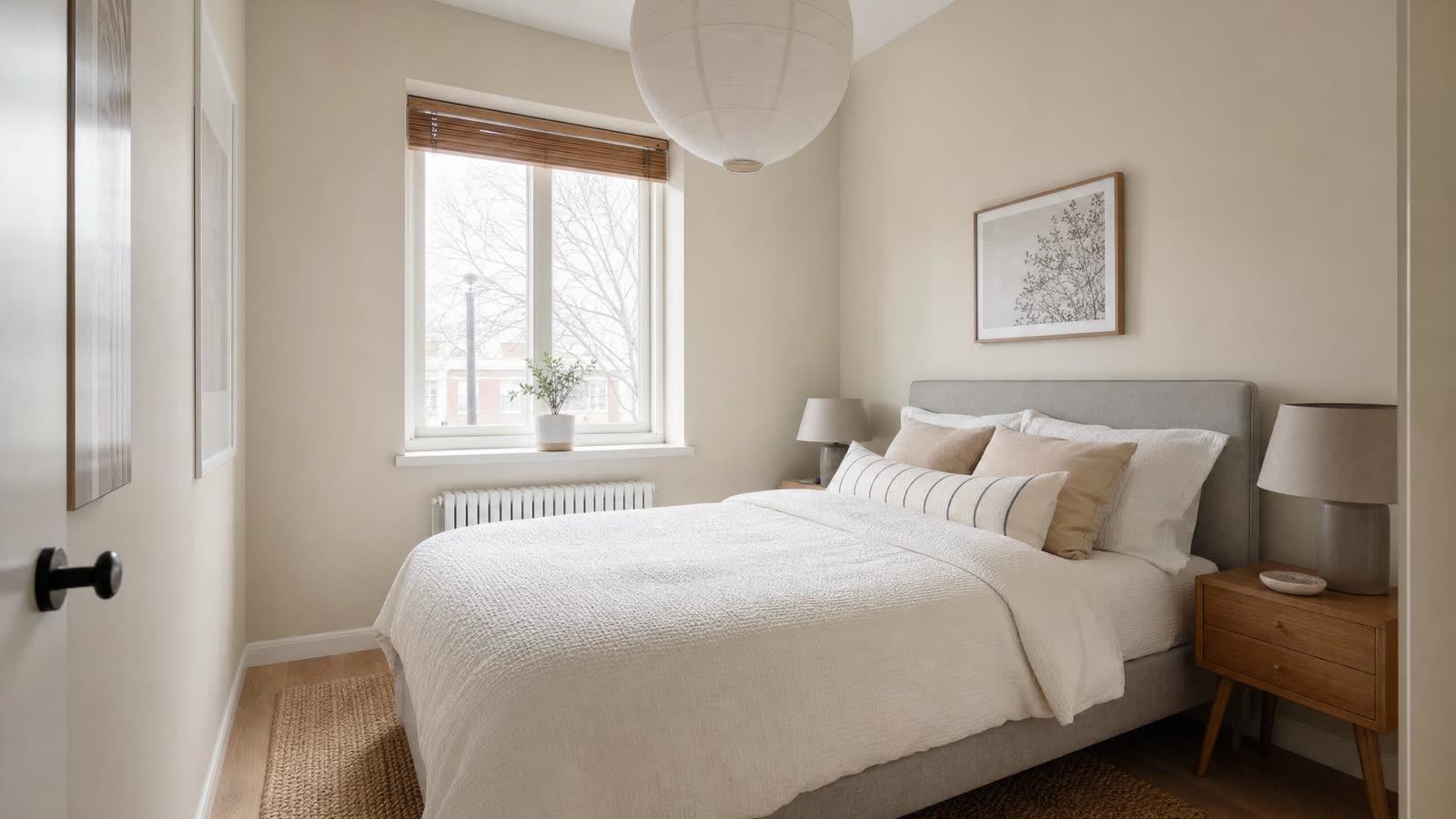
You stand in the living room and it looks fine. You take the photo and it looks like a basement. This is not a camera fault — it is the difference between a human eye, which adapts continuously and constantly re-meters as it moves around the room, and a sensor, which gets one exposure for the whole frame.
The real cause: the window wins
A bright window can be twenty times brighter than the wall beside it. The camera has to pick one, and if it picks the room, the window blows to white. If it picks the window, the room goes dark. Most phones split the difference and you get a compromise that satisfies nobody.
At the shoot
- Turn on every light in the house, including hallways and closets — it lifts the floor of the exposure everywhere
- Open every blind fully; half-open blinds cast stripes
- Make sure HDR is on so the phone can hold both ranges
- Expose for the window and let the room fall dark — dark is recoverable, blown white is not
- Brace against a door frame so a slower shutter stays sharp
When you cannot go back
Most listings do not get a second shoot. The good news is that an underexposed frame with a correctly exposed window is the ideal starting point: the information in the shadows is still there, and lifting it back is a solved problem. What is not recoverable is a window that came out as a flat white rectangle, because there is no data behind it.
The honesty line
Brightening a room to match what a person standing in it would actually see is presentation, and it is standard practice. Lighting a north-facing basement bedroom so it reads like a sun room is misrepresentation, and buyers notice within ten seconds of walking in. Aim for accurate, not maximal.
Common questions
Should I expose for the room or the window?
Expose for the window and let the room fall dark. A dark room still contains its detail and can be lifted afterwards. A window that recorded as flat white contains nothing and cannot be recovered.
Does turning on the lights actually help?
Yes, more than most agents expect. Every lamp and overhead in the house raises the floor of the exposure, which narrows the gap between the room and the window and gives the camera a range it can hold.
Is brightening a listing photo allowed?
Brightening a room so it matches what a person standing in it would see is standard presentation and generally acceptable. Lighting a dark basement room so it reads like a sun room is misrepresentation, and buyers notice within seconds of walking in.
PropWalk lifts dim interiors, evens out mixed bulb colour, and keeps the view through the window instead of flattening it.
Brighten a room free →Found this useful? Get more PropWalk guides in your Google results.