What furniture style should you stage in?
Short answer
Match the style to the likely buyer and the home’s architecture, not to your own taste. Transitional — clean lines with warm materials — is the safe default because it reads current without dating quickly. Modern suits new builds and city condos; traditional suits period homes and family neighbourhoods.
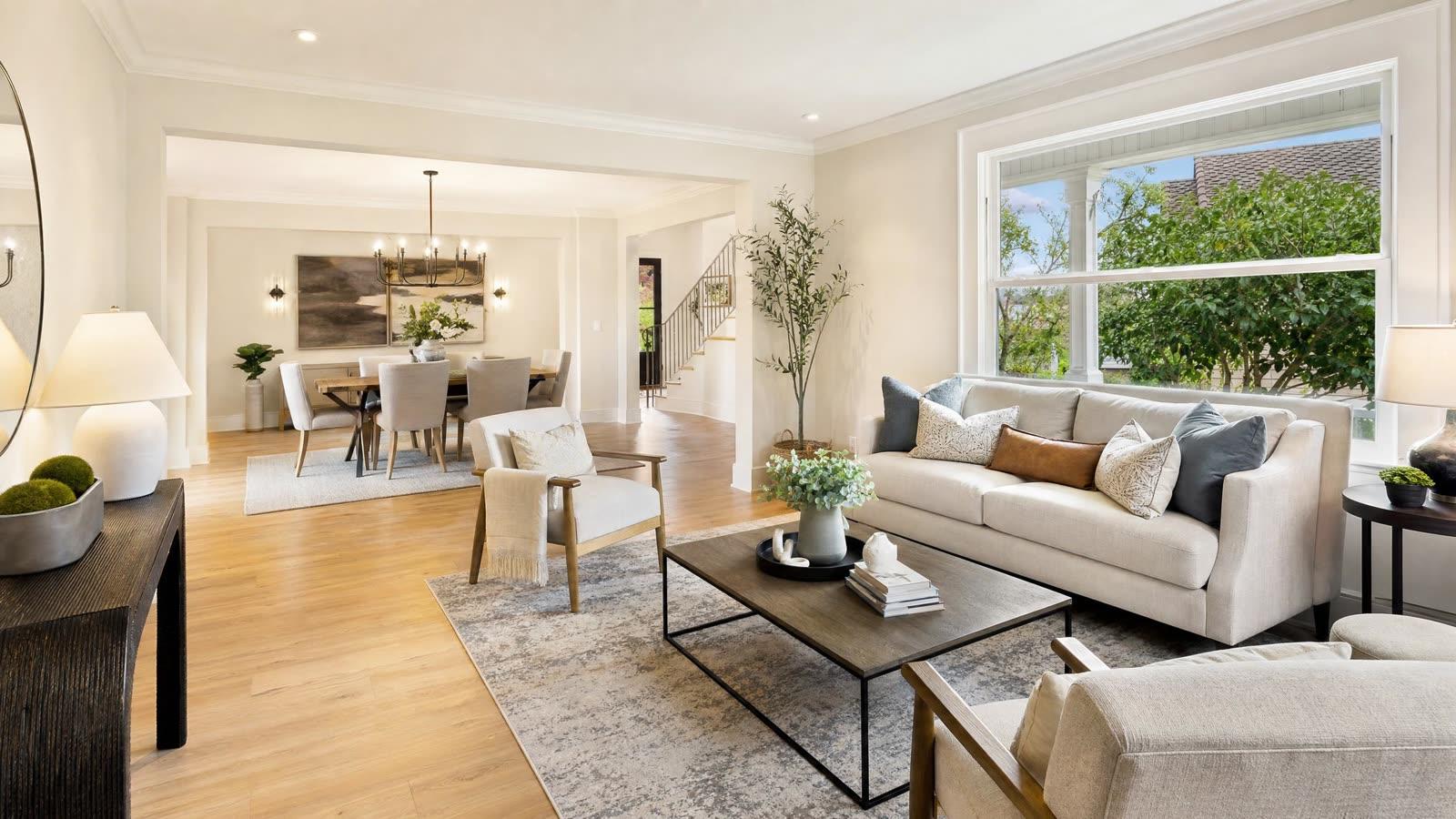
Agents tend to pick a staging style they personally like. The better question is who is going to buy this house, and what does the room have to prove to them.
Match the architecture first
Furniture that fights the building looks wrong even when it is beautiful. A minimalist white sofa in a Craftsman with dark wood trim reads as a mistake; a heavy traditional set in a glass-walled new build reads as dated. The room tells you the range before the buyer does.
| Home type | Style that works | Why |
|---|---|---|
| New construction | Modern or transitional | Matches the finishes already installed |
| City condo | Modern, scaled small | Proves the space works without crowding |
| Suburban family home | Transitional | Broadest appeal, reads current |
| Period or character home | Traditional or eclectic | Furniture should not fight the trim |
| Luxury | Restrained and expensive-looking | Fewer, better pieces beat a full room |
Scale is more important than style
The most common staging failure is not the wrong style, it is the wrong size. Furniture that is too large makes the room look small, which is the exact opposite of the goal, and furniture that is too small makes the room feel like a doll house. Stage a room with pieces that would genuinely fit — a buyer measuring against the photo and finding it does not work is a buyer who stops trusting the listing.
Give ambiguous rooms a job
A bonus room, a small den, a wide landing. These rooms lose value purely because buyers cannot tell what they are for. Staging them as a home office, a nursery, or a reading room adds a use case to the listing without changing a single thing about the property.
What to leave out
No bold art, no strong colour statements, no anything that reads as somebody’s specific personality. Staging exists to help buyers project themselves into the room. Anything memorable is working against that.
Common questions
Should staging match current design trends?
Slightly behind the trend is safer than on it. A room staged in whatever was on social six months ago dates the listing the moment the trend moves, and listings often sit longer than a trend cycle. Transitional furniture stays acceptable for years.
Can you stage a room in the wrong style and hurt the listing?
Yes. Furniture that fights the architecture makes buyers uneasy without them identifying why, and oversized pieces actively shrink the room. Bad staging is worse than no staging, because it draws attention rather than receding.
Should every room be staged in the same style?
Yes — a single coherent style across the gallery reads as one home. Mixing modern in the living room with traditional in the bedroom makes the set look assembled rather than photographed, which undermines the credibility of every frame.
PropWalk stages a room in the style you pick and lets you swap it if the first try does not fit the house. Your first staged photo is free.
Try a style free →Found this useful? Get more PropWalk guides in your Google results.