Why staged photos look fake — and how to avoid it
Short answer
Five things give staging away: furniture at the wrong scale, missing or wrong-direction shadows, perspective that does not match the room, objects that do not sit convincingly on the floor, and styling that is too perfect. Fix scale and shadows and most of the problem disappears.
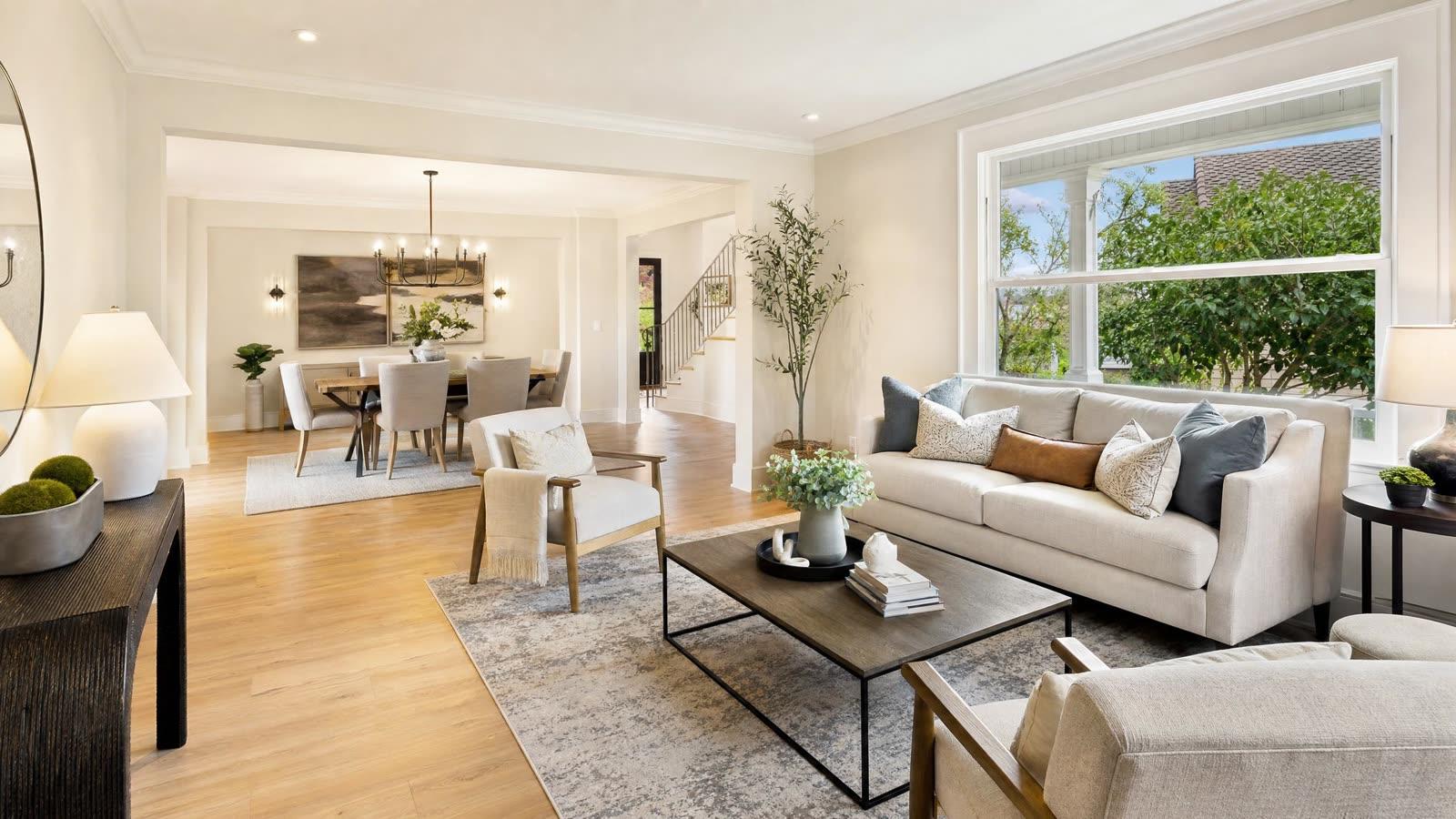
Good staging is invisible. Bad staging draws the eye straight to itself, and once a buyer notices one thing that is wrong, they start auditing every other photo in the gallery. The giveaways are consistent and mostly avoidable.
1. Scale
The most common failure by a wide margin. A sofa that would not physically fit, a bed that overwhelms the wall, a dining table too small for the space around it. Buyers read scale unconsciously and accurately, because they have spent their whole lives in rooms. Stage with pieces that would genuinely fit the room being shown.
2. Shadows
Furniture with no shadow floats. Furniture with a shadow falling the wrong way relative to the window is worse, because it contradicts something already visible in the frame. Check the light direction in the original photo and make sure every added object agrees with it.
3. Perspective
A room photographed at chest height has a specific geometry, and furniture inserted at a different angle sits wrong even when nothing else is off. This is the giveaway hardest to describe and easiest to feel — a rug that does not lie flat along the floor plane is the classic example.
4. Floor contact
Where an object meets the floor is where the eye checks. Legs that end in a soft edge, a rug with no visible texture over the boards beneath, a chair overlapping a baseboard incorrectly. Zoom to 100 percent on every contact point before publishing.
5. Styling that is too perfect
A room with no imperfection at all reads as a rendering. Cushions at perfect angles, a bowl centred to the millimetre, a completely bare surface. Slight asymmetry is what makes a staged room read as a photograph of a room.
The check before you publish
- Would this furniture physically fit? Measure it against a door or window in the frame
- Does every shadow fall away from the window?
- Does the rug lie flat along the same floor plane as the boards?
- Zoom in on every point where furniture meets the floor
- Is anything suspiciously perfectly aligned?
- Is the disclosure on the photo and in the remarks?
When to stop
If a room needs three attempts to look right, the room is probably the problem — an awkward angle, a strange ceiling line, a shot taken too close. Reshoot the frame rather than staging harder. Convincing staging starts with a photo that has somewhere for the furniture to go.
Common questions
Do buyers actually notice virtually staged photos?
Many do, and that is fine when it is disclosed — the point of staging is showing what a space can be, not fooling anyone. What damages a listing is staging that looks wrong, because it makes buyers question the accuracy of the whole gallery.
Do you have to disclose virtually staged photos?
In most MLSs, yes, and virtual staging is often named specifically. The safe practice is a label on the photo plus a line in the public remarks. Our MLS staging rules guide covers what is required and how to word it.
What is the easiest way to make staging look real?
Get the scale right and get the shadows agreeing with the window. Those two account for most of the giveaways, and both are checkable in seconds before you publish.
PropWalk keeps the walls, windows, floor, and light direction of the original photo and adds furniture into them — which is what makes the result hold up at full zoom. Your first staged photo is free.
Stage a room free →Found this useful? Get more PropWalk guides in your Google results.