Does staging actually pay for itself?
Short answer
Industry surveys consistently report that staged homes sell faster and that agents believe staging raises offers, but the data is self-reported and rarely controlled. The reliable return is narrower: staging helps most on vacant homes, ambiguous rooms, and listings competing directly against staged inventory.
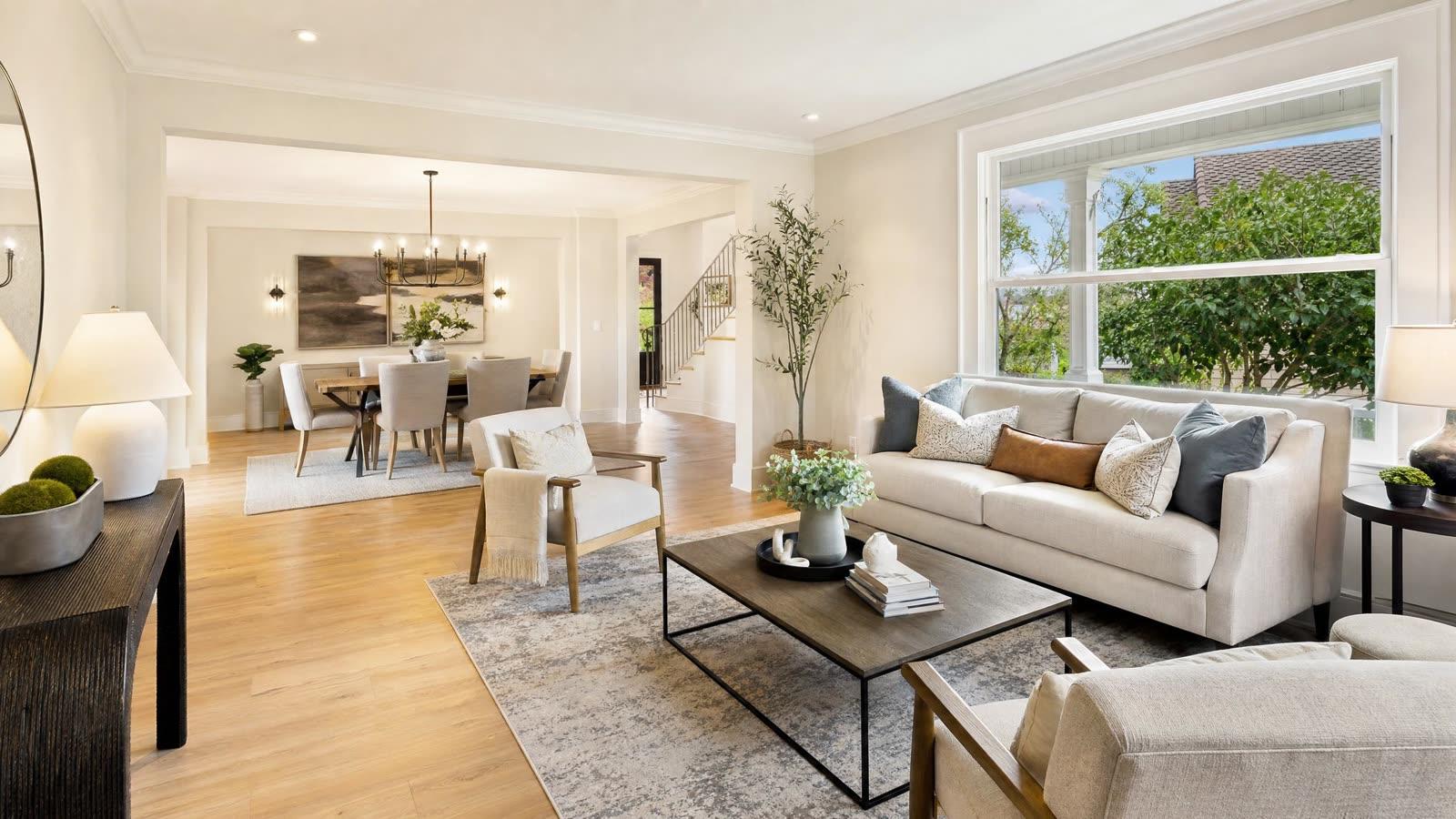
Every staging company cites a statistic. Most of those numbers come from surveys of agents and stagers rather than from controlled comparisons, and none of them control for the obvious confounder: the sellers who pay for staging are also the sellers who price correctly, fix the small stuff, and hire a photographer.
What is actually well supported
- Staged homes are widely reported to spend less time on market
- Most buyer agents report that staging helps buyers visualise a property
- The living room, primary bedroom, and kitchen are consistently ranked as the rooms that matter most
What is far weaker is any precise claim about a percentage lift in sale price. Treat those numbers as directional at best.
Where the return genuinely comes from
Staging is a visualisation aid. It pays when buyers cannot read a space without it, and it pays nothing when they can. That gives you a clear test: is there a question this room raises that furniture would answer?
| Situation | Expected return |
|---|---|
| Vacant home | High — every room needs scale and purpose |
| Room with no obvious use | High — it adds a feature to the listing |
| Dated or oversized furniture | Medium — depends on the competition |
| Occupied, well furnished | Low — the furniture already works |
| Architecture is the selling point | Negative — furniture competes with it |
The cost side is where the decision is actually made
A physical staging contract with a three-month minimum on a listing that sits for five months is a real number that can eat a meaningful slice of commission. Digital staging at a few dollars per photo does not need a return calculation at all, which is the honest reason it has taken over the middle of the market: the question stops being whether it pays and becomes simply whether it helps.
The one thing with a better return than staging
Fixing the photos. A dim, cluttered gallery of a well-staged house still underperforms a clean, bright gallery of an unstaged one, because the photo set is what buyers actually see. Get light and clutter right first — staging is the next step, not the first one.
Common questions
How much does staging increase a home’s sale price?
No credible controlled study supports a specific percentage. Industry surveys report agent and stager beliefs about price lift, which is not the same thing. The better-supported claim is that staged homes tend to sell faster.
Is staging worth it in a seller’s market?
Less so. When inventory is tight and buyers have few options, visualisation aids matter less. Staging earns the most in slower markets and where your listing is competing directly against staged inventory.
What is the cheapest thing that improves a listing the most?
Clearing clutter and getting the light right in the photos. Both are free or close to it, and both affect every single frame in the gallery, which is more than staging four rooms does.
Sources
Light and clutter first, staging second — PropWalk does both from the photos you already have, so you can test whether a room needs furniture before you pay for any.
Open the tools free →Found this useful? Get more PropWalk guides in your Google results.