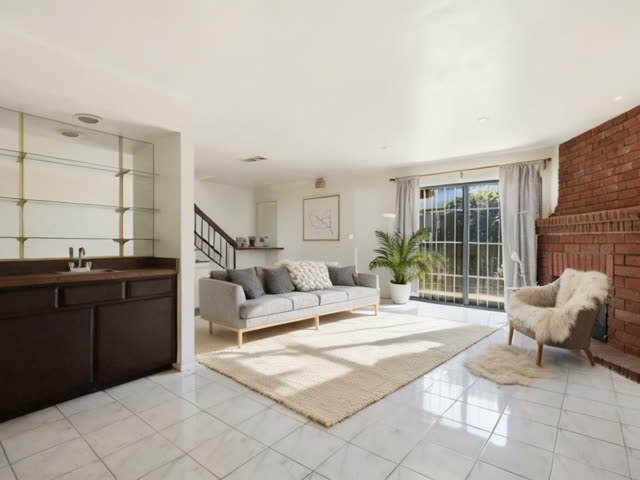
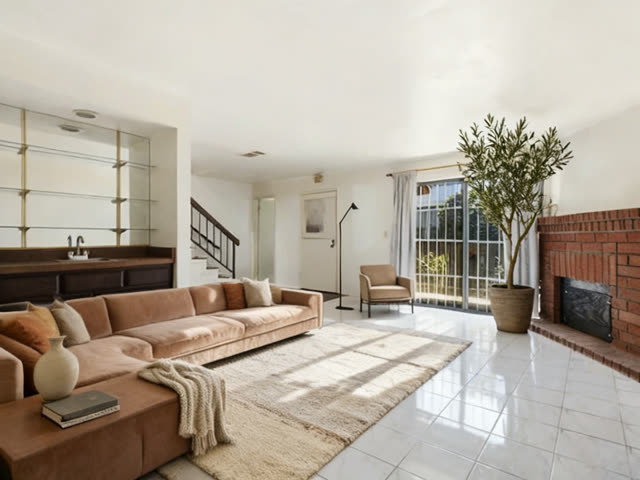
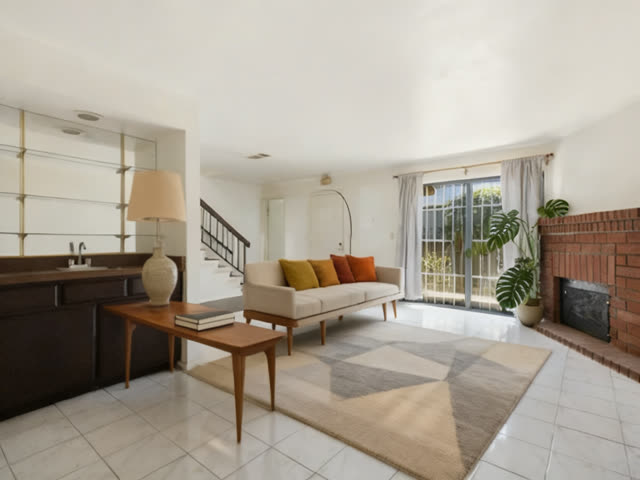
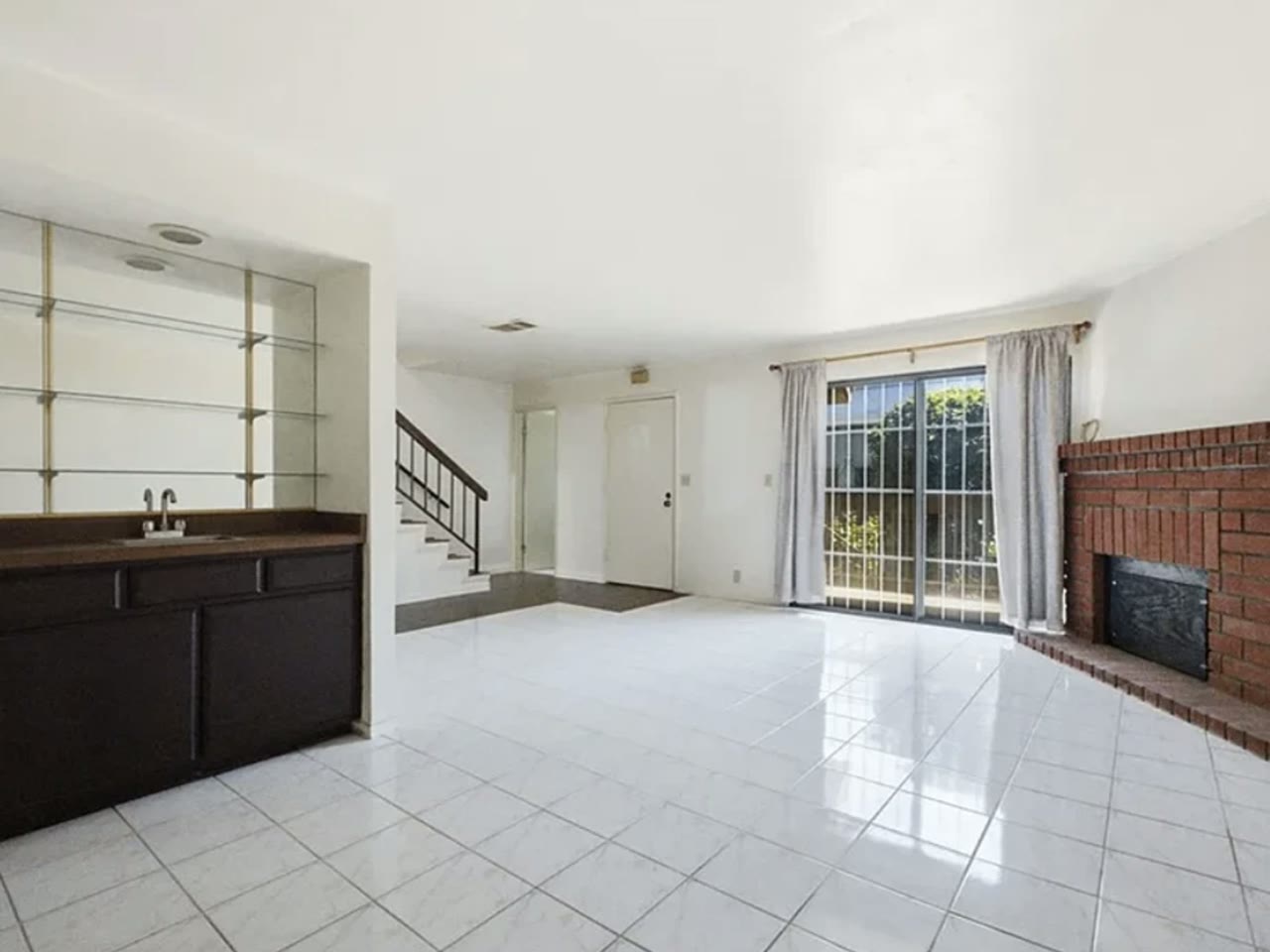
This comparison is usually framed as a price question, and the price gap is real. But the difference that changes how agents actually work is turnaround: a staging queue measured in days versus one measured in minutes produces two different marketing calendars, not two versions of the same one.
Side by side
| Traditional service | PropWalk | |
|---|---|---|
| Per photo | $25–$40 | ~$1 (10 credits) |
| Turnaround | 24–48 hours | Under a minute |
| Revisions | Another round trip, often billed | Re-rolls included, minutes each |
| A vacant 8-photo listing | $200–$320 | About $8 |
| Who does the work | A human editor composing in Photoshop | Software staging the room directly from the photo |
What the 24–48 hours actually costs
The queue is fine until something is wrong. A sofa scaled too large or a style that fights the architecture costs a full day per attempt at a service — and staging problems are exactly the kind you only see in the finished image. On a listing going live Thursday, a Tuesday mistake is unrecoverable. When each attempt takes a minute, a bad result is an annoyance instead of a schedule change.
Where the traditional service still earns its fee
Bespoke styling at the top of the market. A designer choosing every piece for a luxury hero shot brings taste that software does not, and at that price point one wrong sofa reads instantly. If the listing is an $8M flagship and the staging IS the marketing, a human editor on the two or three photos that matter is money well spent — often alongside instant staging for the rest of the set.
The rules are identical either way
However the furniture gets into the photo, MLS rules are the same: the image must be labeled as virtually staged, the empty original should stay available, and nothing may be staged over a defect. The room itself — walls, windows, floors, fixtures — has to come out exactly as photographed. Judge any option, human or software, on whether it holds that line.
The volume math
Per-photo pricing punishes exactly the agents who need staging most — anyone listing vacant homes regularly. On PropWalk a staged photo is 10 credits, roughly $0.50–$1 depending on how you buy: the entry pack is $10 for 100 credits, and on the Office plan ($199/month) a full listing — a walkthrough video plus a 30-photo session — works out to about $20. Three vacant listings a month at a traditional service costs more than a year of most software.
Questions
Common questions.
Is instant staging as realistic as a $25–$40 per image service?
On standard listing photos, yes — furniture is scaled and lit convincingly, and re-rolls mean you keep the version that looks right. Test with your own hardest photo, a dim carpeted bedroom rather than a bright loft. Bespoke luxury styling is the case where a human editor still shows.
What does it cost to stage a whole vacant listing?
At $25–$40 per image, a typical 8-photo vacant listing runs $200–$320 per revision round. At 10 credits per photo, the same set costs about $8, and staging every photo in a 30-photo gallery is still under $30.
Do I have to disclose staging done with software?
Yes — the disclosure rules attach to the image, not the method. Label virtually staged photos, keep the empty originals available, and never stage over damage or defects. Those rules are the same whether a designer or software placed the furniture.